Building what outlives you

A conversation with JTB Architects’ director Michael Dillon.
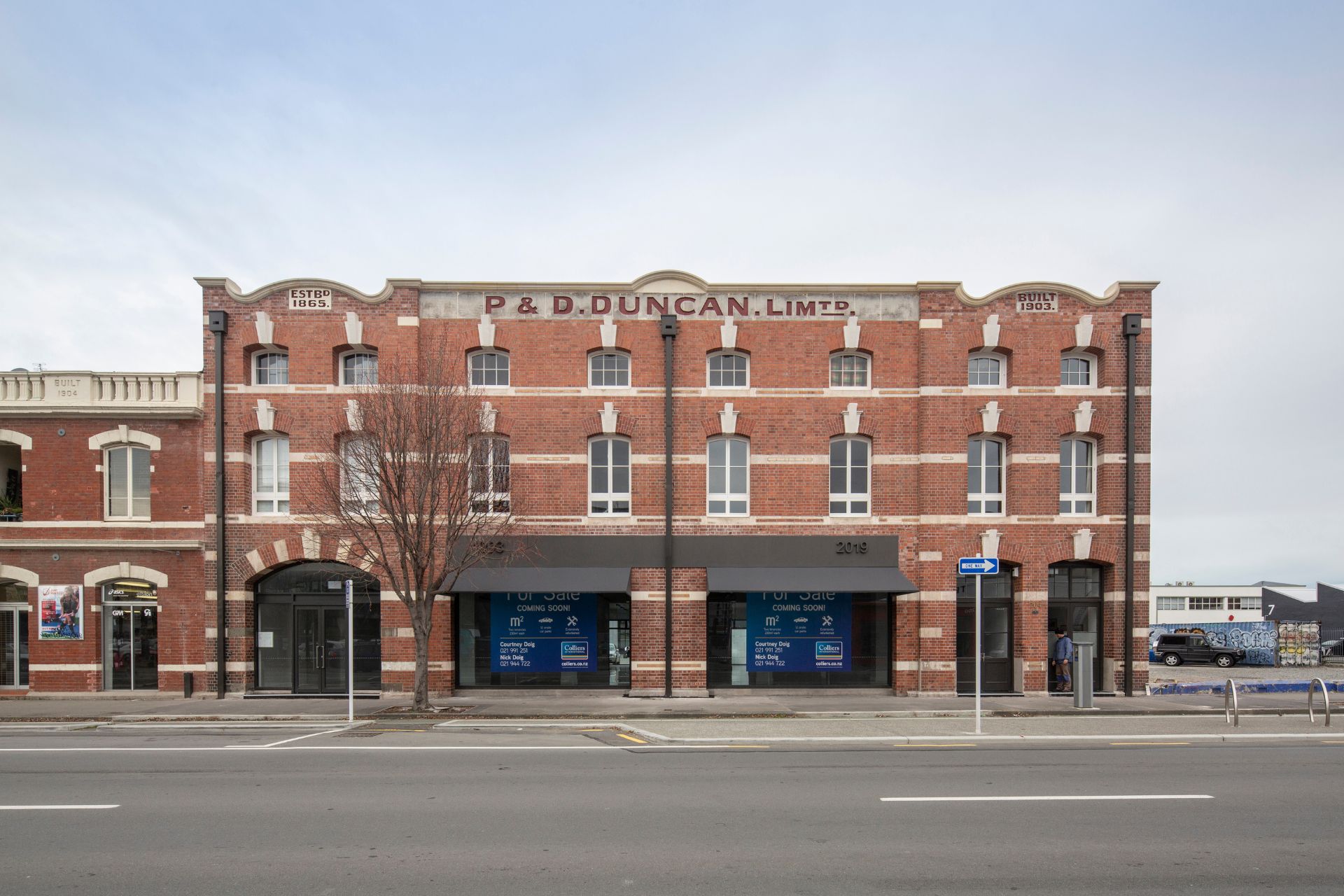
When Michael Dillon’s team took on the restoration of the P&D Duncan Building, a Category 2 heritage building in central Christchurch, badly damaged in the quakes, the brief was to keep its soul intact. “We left the brick, the stone, the great roof trusses visible wherever we could,” says the JTB Architects’ director.
“That kind of work reminds you that architecture is one of the few professions where what you make outlives you. That’s a privilege, and it keeps you honest.”
JTB’s philosophy, to help make New Zealand’s built environment a better place, runs through every project. Michael says what separates a great architect from a merely competent one is that focus on people. “You have to be able to hold a client’s vision in one hand and the reality of a site, a budget, and a community in the other, and find something that genuinely honours all of it,” he says.
“But beyond the technical demands, I think what separates the truly great is the ability to build enduring relationships, with clients, with communities, with the teams you work alongside, based on trust and mutual respect. Great buildings rarely emerge from a single conversation or a single mind.”
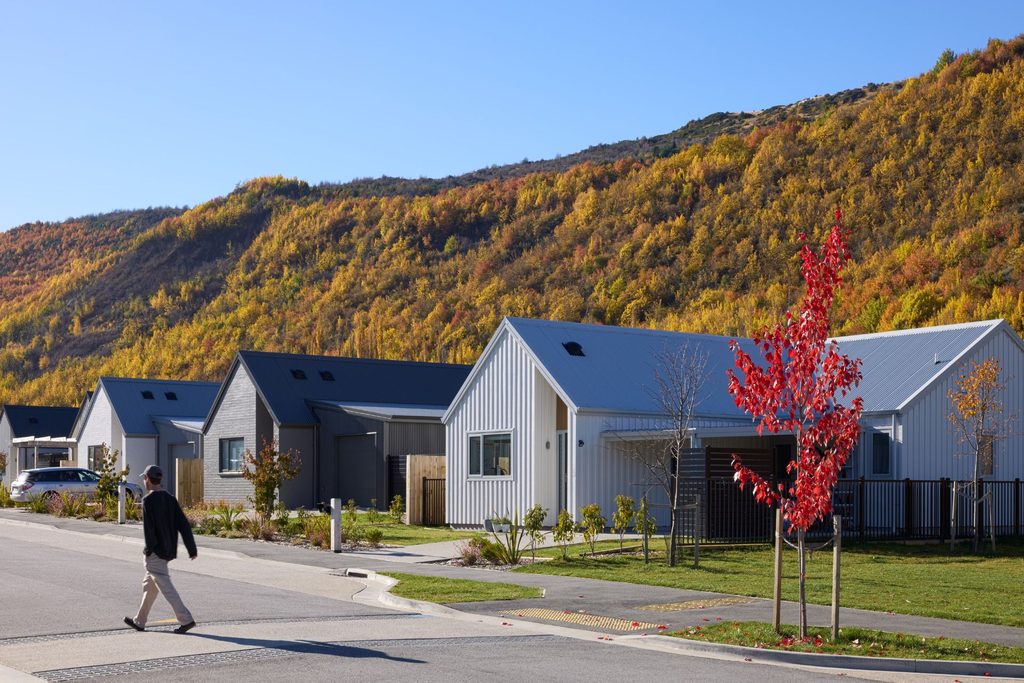
That ethos is visible in Tewa Banks in Arrowtown: 68 affordable homes for the Queenstown Lakes Community Housing Trust, on a site gifted by QLDC beside the Arrow River, with five tenure types, ground source heating, and community gardens tying the development back to the river.
“It’s architecture that genuinely serves the people who need it most.” The project began years ago with a handful of house designs for the Trust and grew, one commission at a time, into a full master plan. “It’s incredible what the Trust has managed to do, not just with Tewa Banks, but across all of their developments. Housing that’s genuinely affordable is such a challenge in the Queenstown region, and it’s been a lovely project to be part of.”
Michael’s own role has morphed over the years. First, he was a project architect who designed, worked on-site and dealt with consultants and clients directly.
Joining JTB meant establishing a new office essentially from scratch, before hiring staff and learning to manage workflows and quality across a growing business. Becoming a director a few years ago, he says, pulled him further from the drawing board and into a people-focused role.
Much of that role is about building a culture where the wider team can do its best work. JTB’s one-studio model unites five offices as a single collaborative practice, allowing every project to draw on specialist knowledge from across the country.
Expertise such as Michael’s experience in earthquake restrengthening can support projects beyond Christchurch and Wellington. The entire practice works under one shared vision.
His perspectives have also changed. Early on, he says, it was tempting to see every project decision as a trade-off, a loss somewhere.
Now he sees it differently. “It’s not really about compromise,” he says.
“It’s about making the best decision you can, with the information in front of you at the time, in service of the vision for the project. Thinking of everything as a compromise makes it sound pretty negative, when actually it’s an opportunity to make the best call and keep the project moving. It’s more collaborative than compromise.”
Another framing he’s wary of is style. Instead, what interests him is work that couldn’t have been designed anywhere else.
The Panorama Road houses in Sumner are one example. On a steep, constrained 645m² site dropping to the Zig Zag Track, the design embraces the slope.
A CLT structure steps down the hillside following the contours, with every window placed to frame views of Pegasus Bay and the Kaikōura Ranges. “When you get the approach right,” he says, “the style takes care of itself.”
Such fleshed-out perspective shifts are the product of a multifaceted portfolio. After years mostly in residential work, Michael has spent more recent time on commercial projects.
His role there is less about delivering every element personally and more about holding a singular vision steady while a wider team of specialists handles technical details. “It’s a real joy,” he says of the mindset change. “You still have to hold onto that vision, but you get to bring other people along with it too.”
Michael’s advice to homeowners echoes his general approach. He says to work with what’s already there, consider the threshold between in and out, and let the bigger outcome follow from getting the small things right.
“A well-considered door, a simple pergola, a view framed from a living area to the garden; these moves cost relatively little but fundamentally change how a home feels to inhabit,” he says. Light matters just as much. “Sometimes a single well-placed window does more for a room than a complete renovation.”
“Stay curious and stay grounded,” Michael says. “The craft deepens over a lifetime, and that’s one of the great privileges of this profession.
There’s always more to learn.” He says architecture is a team endeavour, from the first conversation to the final coat of paint, and the quality of those relationships shapes the quality of the work. It all comes back to people.
“Expect setbacks, but keep the fire in you. At its heart, architecture is about creativity and problem-solving, and that never gets old.”