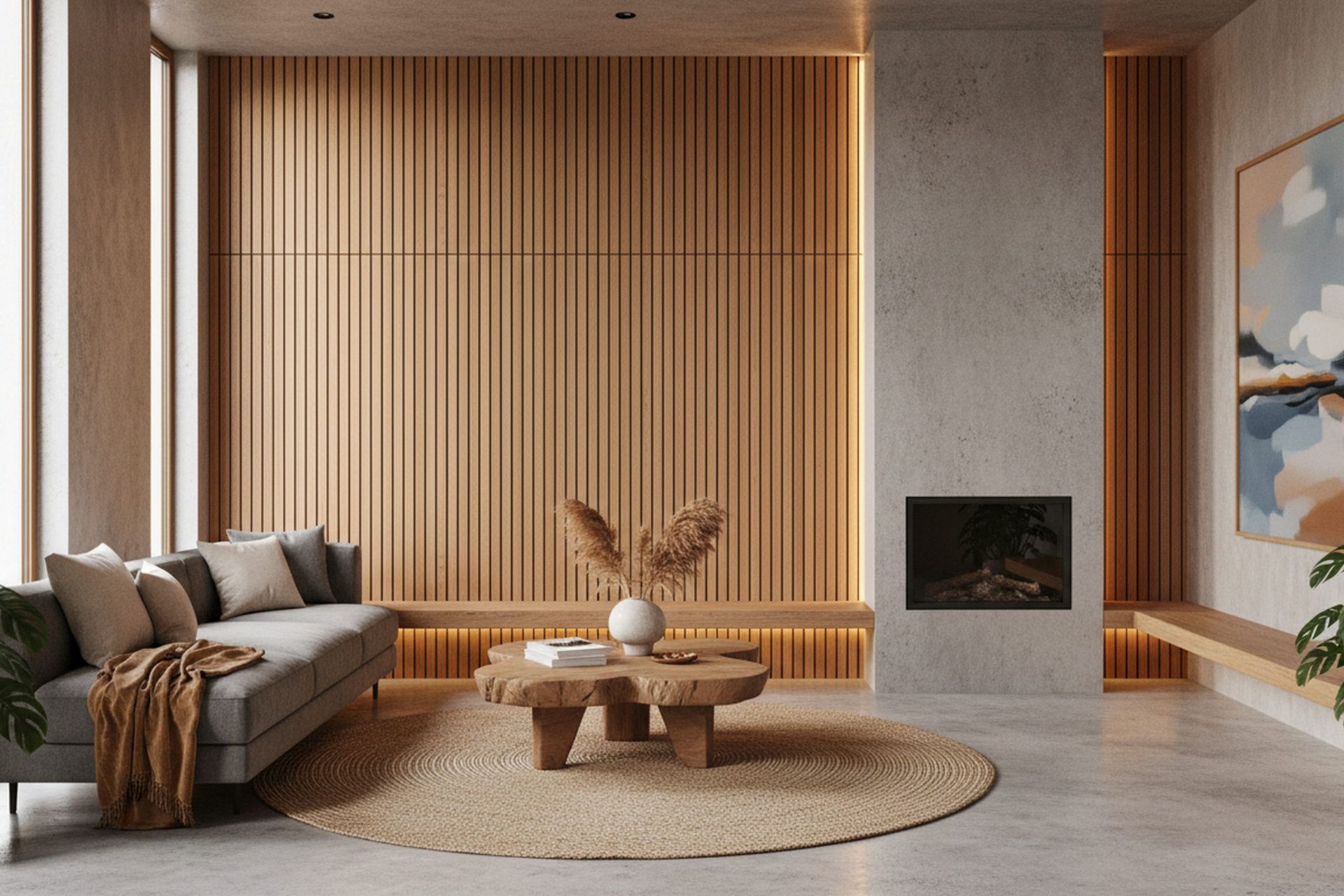
DIY wood panelling feature wall

Feature wall panelling has become one of the most popular ways to update an interior. Timber panels add warmth, texture, and depth to a room. They work well with neutral colour schemes and natural materials. Many modern panel systems are designed for easy installation. This makes wood panelling a realistic DIY project for homeowners who want to improve their space without a full renovation. Suppliers in New Zealand now offer a wide range of wall panel products, including acoustic panels, decorative boards, and pre-finished systems.
Why wood panelling is popular in modern interiors
Wood panelling adds texture that painted walls cannot provide. It helps large rooms feel more comfortable and smaller rooms feel more detailed. Natural finishes are suited to calm colour palettes such as white, beige, grey, and warm earth tones.
Designers often use timber features to create a cosy and relaxing atmosphere. Vertical lines can make ceilings feel higher, and slatted panels can soften hard surfaces. A single feature wall can change the look of a room without making it feel busy.
Types of wall panelling
Acoustic timber panels
Acoustic slat panels, often have timber veneer strips fixed to an acoustic backing. They improve sound absorption while adding a strong visual feature. Products from companies such as WVH, Feature Panels NZ, and Newtech are designed to be fixed directly to
plasterboard or battens. Many come pre-finished, which makes installation faster. Acoustic panels look good and are effective for keeping sound contained in a room, such as living rooms, media rooms, music rooms, and anywhere that sound control is needed.
Decorative MDF and profile panels
Profile boards and MDF panels are another popular option. Suppliers such as Profile Panels offer a range of grooved, fluted, and decorative wall linings. These panels can be painted to suit your interior colour scheme. They are often used to create board and batten walls, shaker style panels, or vertical line features. MDF panels are easy to cut and fix, which makes them suitable for DIY projects.
Pre-finished feature panels
Pre-finished wall panels save time because they do not need painting or staining. Companies such as Feature Panels NZ and Newtech supply panels with timber veneers, laminates, or textured finishes. These products are designed for interior feature walls and ceilings. Many systems use tongue and groove or hidden fixing methods to give a clean result.
Timber veneer and plywood panels
Timber veneer panels give the look of solid wood without the weight or cost. Birch ply, oak veneer, and other decorative boards are available from specialist panel suppliers. These sheets can be cut to size and fixed to the wall to create a simple and modern feature. Veneer panels suit homes that use natural materials and soft colour palettes.
Traditional timber boards
Solid timber boards such as tongue and groove pine are still widely used. These boards create a classic look and suit villas, baches, and country homes. They can be painted, stained, or left natural. Installation takes more time than panel systems, yet the result is strong and long-lasting.

Where to install feature panelling
Feature panelling works best when used in one area rather than the whole room. A single wall gives the strongest effect. Living rooms are a common choice. Panelling behind a sofa or television creates a focal point.
Bedrooms are another good place for timber panels. A feature wall behind the bed adds warmth and makes the room feel restful. Entry areas and hallways also benefit from extra texture. These spaces often feel plain without some form of detail.
Acoustic panels are useful in media rooms and open-plan living areas. They reduce echo and improve sound quality while adding a modern design feature.
Tips for DIY installation
Many modern panel systems are made for home installation. Always measure the wall carefully before cutting any material. Mark the layout so spacing stays even. Use a level to keep lines straight.
Most panels can be fixed with construction adhesive and nails or screws. Some acoustic and feature panels use hidden fixing clips. Follow the supplier instructions closely to get the best result.
Prepare the wall before starting. The surface should be clean and flat. Remove skirting boards if needed, so panels fit neatly. If panels need painting, apply the finish after installation unless the product is pre-coated.
Creating a warm and natural interior
Wood panelling looks best when it is part of a balanced design. Neutral colours help the texture stand out. Soft furnishings such as rugs, cushions, and curtains add to the cosy feel. Warm lighting highlights the grain of the timber and makes the room feel more relaxed.
Light timber tones create a calm and modern look. Darker finishes add drama and depth. Both styles work well when paired with simple furniture and natural fabrics.
A simple upgrade with strong impact
Feature wood panelling is one of the easiest ways to add character to a home. Modern panel systems from suppliers such as WVH, Profile Panels, Newtech, and Feature Panels NZ make installation more accessible than ever. With the right planning, a DIY feature wall can add warmth, texture, and a natural feel that transforms the whole room.