Organic bathroom design and how to keep natural materials looking good

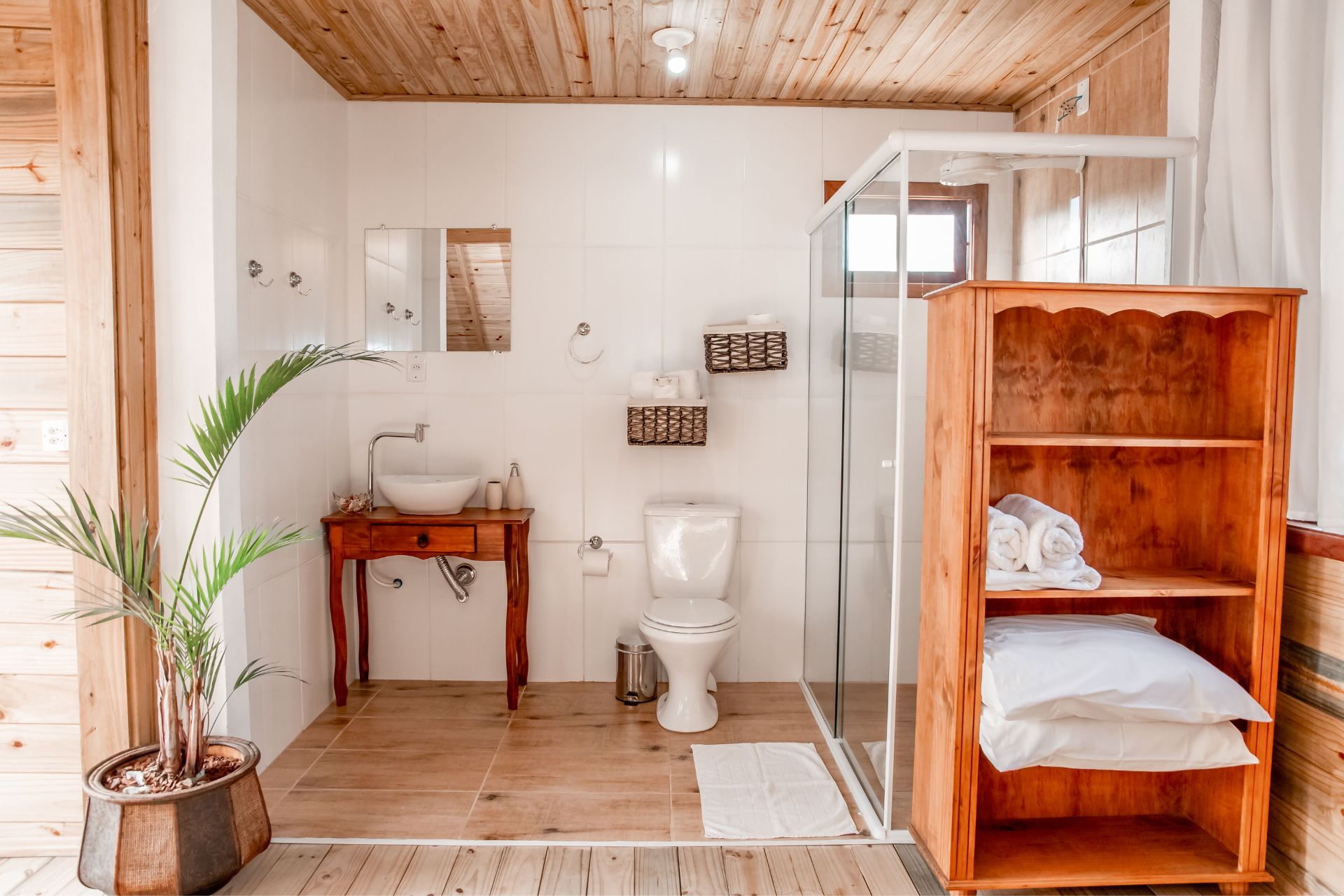
Picture a bathroom that feels closer to a bush walk than a hospital corridor. A timber vanity, a stone basin, walls in a soft clay colour and a fern on the windowsill. That’s the organic look, and it swaps glossy white for materials with grain, texture and a bit of character.
The colours are drifting the same way. Resene stylist Megan Harrison Turner picked moss and forest greens, warm pinky-brown rosewoods and the softest sage greens among the shades she’s seeing come through in 2026. She also noted black walls softening towards browner, more organic pigments.
Curves finish the look. Think an arched mirror, a rounded basin or a vanity with softened corners. Add plants that cope with steam and give them a window.
Choose materials that can take the water
Natural materials and bathrooms don’t always get along. Steam, splashes and condensation hit every surface, and some finishes cope far better than others.
Clause E3 of the Building Code covers internal moisture. It requires buildings to be built to avoid fungal growth and moisture damage, and it names bathrooms among the spaces that need the right mix of insulation, ventilation and warmth.
Level, the sustainable building site run by BRANZ, explains what that means for finishes. Under the Code’s standard compliance route, stone and ceramic tiles in wet areas can absorb no more than 6% water and need waterproof grouted joints. Stone is a natural fit for the organic look, so ask your supplier for the absorption figure before you fall for a tile.
Timber needs more care. BRANZ doesn’t recommend timber strip or overlay flooring where floors get splashed or mopped, because the boards move and crack the finish.
Timber wall boards sit outside that standard route, so on a consented job they have to go through as an alternative solution. They aren’t suitable inside a shower at all. The same guidance says three or more coats of semi-gloss or full-gloss paint can give them an impervious finish, and oiled finishes aren’t recommended in wet areas.
Paint choice matters too. Matt coatings should only be used in dry areas, while high-gloss coatings are easier to clean and less affected by mould.
That matters if you love the chalky look of limewash or a flat clay-toned paint. Keep it on walls well away from the shower and basin, and put timber where it mostly stays dry, such as a vanity, open shelving or a stool.
Keep the steam moving
Condensation gives mould the damp it needs, and the answer is a balance of warmth and ventilation. In a bathroom, that mostly means a decent fan.
The Code’s acceptable solution for ventilation requires an extractor fan in bathrooms, and the fan must exhaust air to the outside.
Rental homes have a clear benchmark. Under the healthy homes standards, Tenancy Services says any fan installed after 1 July 2019 in a room with a shower or bath must have a diameter of at least 120mm, including ducting, or an exhaust capacity of at least 25 litres per second. Recirculating systems, and fans that don’t extract to the outdoors, don’t meet the standard.
Owner-occupiers aren’t bound by that rule, but it’s a handy number to give your electrician. Run the fan through every shower and for a while afterwards, crack a window when you can and squeegee the shower walls before you get out.
Clean gently
Natural stone falls into two broad camps. The US-based Natural Stone Institute, an industry association, groups marble, limestone, travertine and onyx as calcareous stones, made mainly of calcium carbonate, which is sensitive to acids. Granite, slate, quartzite and sandstone are siliceous and generally resist household acids, though acidic cleaners still aren’t recommended.
Its care guide says products containing lemon, vinegar or other acids may dull or etch these stones. Scouring powders and creams can scratch some stones. Many toilet bowl cleaners and rust removers contain traces of hydrofluoric acid, which attacks every stone, granite and quartzite included.
So the popular vinegar spray is out for a marble vanity. The institute recommends a neutral cleaner, stone soap or a little mild dishwashing liquid in warm water, followed by a rinse and a dry with a soft cloth. For soap scum, it suggests a squeegee after each use and a non-acidic soap scum remover.
Sealing helps, but it won’t make stone stain-proof, only more resistant to staining. Ask your supplier whether your stone needs sealing and how often. If acid has already etched the surface, a stone restorer can repolish it.
Timber is simpler. Wipe up splashes before they sit, use a damp cloth with a gentle cleaner, and keep wet towels and bath mats off timber surfaces.
An organic bathroom is fairly easy to live with. It just needs fresh air, a soft cloth and nothing out of the vinegar bottle.