How to work with your kitchen designer

A kitchen is one of the most significant investments you’ll make in your home. Working with a professional kitchen designer can transform your space from functional to exceptional, but the process works best as a collaboration between designer and homeowner.
When Tania Moore and her partner found a kitchen designer for their new family home, they were excited to discuss the options. “We decided to go with a private kitchen designer and we were lucky because the designer we chose is also a friend. We gave him our plans and through his experience he showed us what would work for our lifestyle and helped us to change a couple of things in the plans” says Tania.
Here are some ways to approach working with a kitchen designer to help you achieve a result that reflects your lifestyle and budget:
Understand the designer’s role
Many kitchen designers work within specialised kitchen studios, joinery businesses or design-and-build companies. Their role typically includes:
- Assessing your space and taking detailed measurements
- Creating layout options and 3D renders
- Specifying cabinetry, benchtops, hardware and finishes
- Coordinating appliances and plumbing requirements
- Ensuring compliance with the New Zealand Building Code where relevant
If your new kitchen involves any changes to plans, your designer may collaborate with an architect, draughts person or builder. Clarify early who is responsible for what, especially if you are managing multiple trades.
Be transparent about budget
Kitchens can vary widely in cost depending on materials, customisation and scope. A good designer will help you allocate funds strategically. For example, they might help to manage your budget by recommending that you spend on quality hardware and durable benchtops while selecting cost-effective options elsewhere.
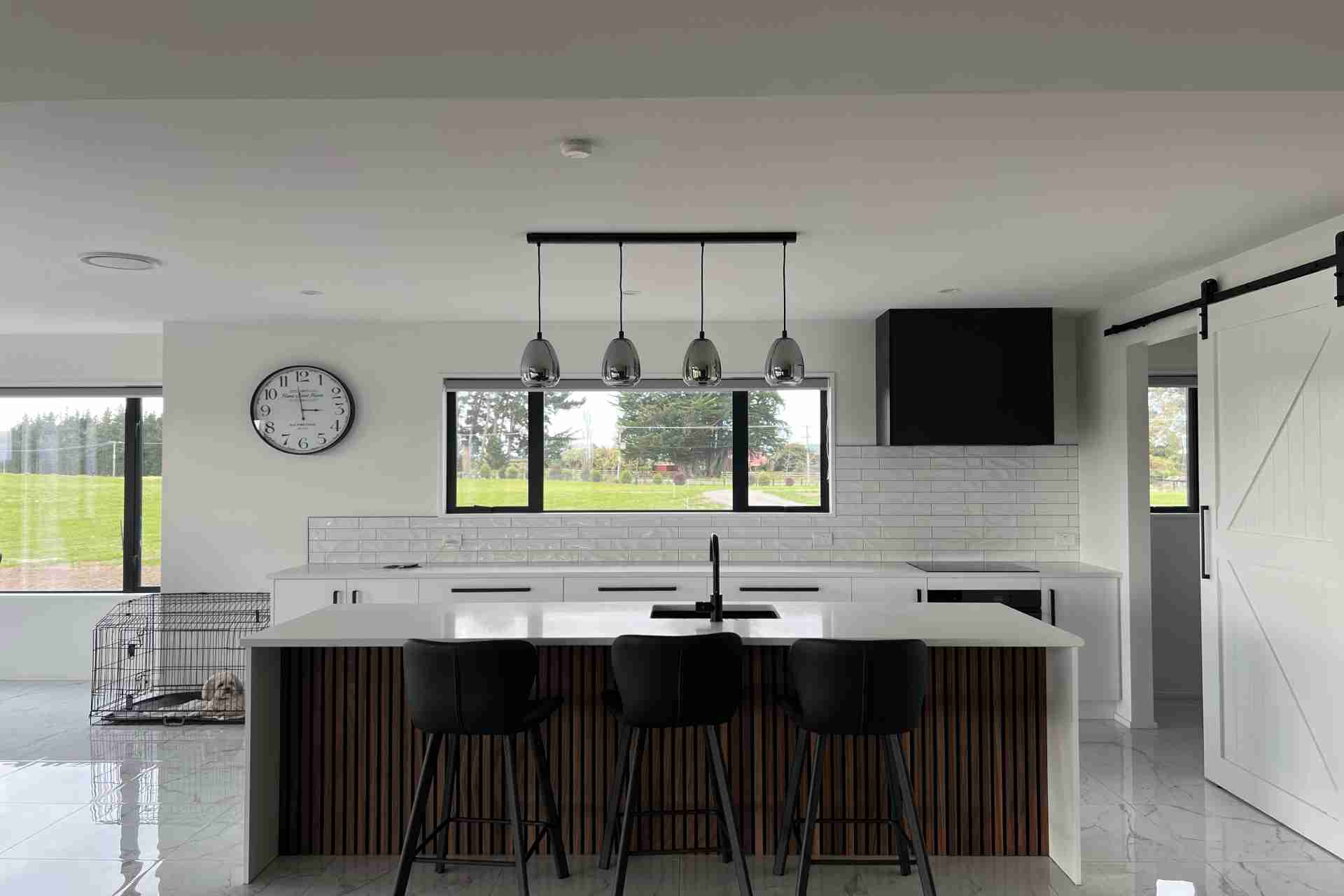
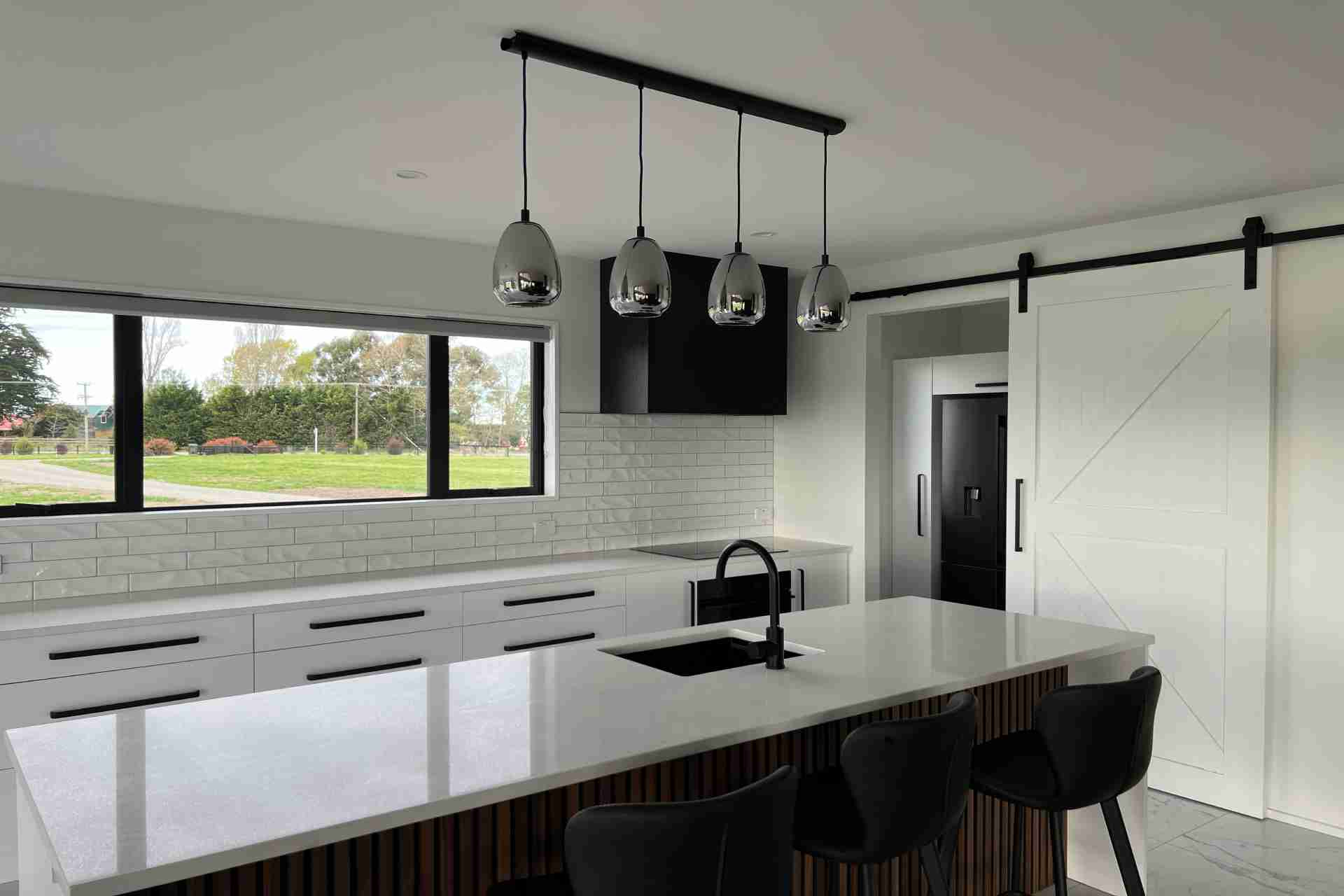
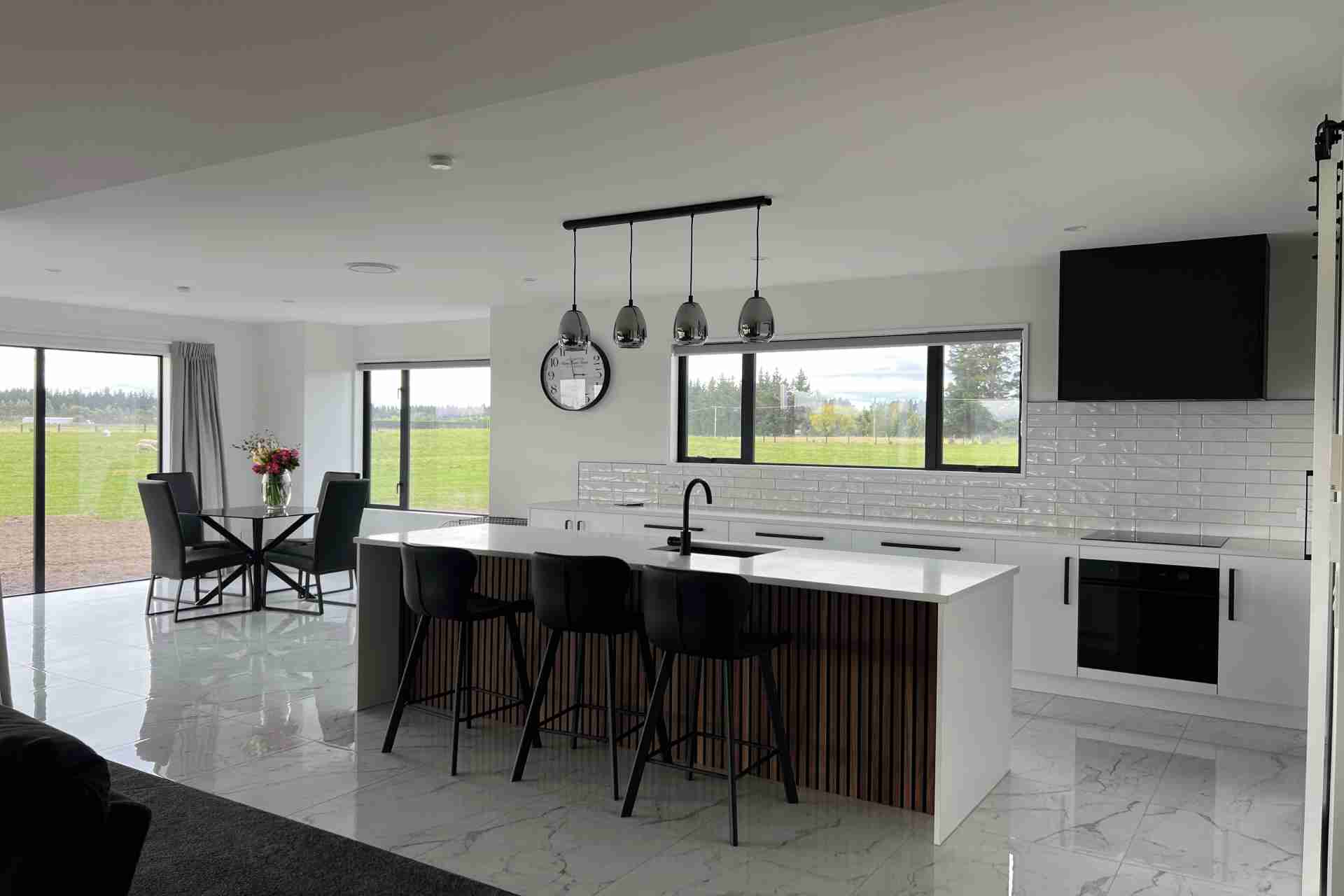
For Tania and her partner, the focus was on maximizing light, space and materials over appliances. As a busy family, the design priorities were more around connection than cooking with the large kitchen island serving as a social hub in their open plan space.
Approach functionality first
While inspiring kitchen images are helpful, avoid becoming locked into one look you’ve seen online. Each home has unique spatial, structural or council-related considerations that influence what’s possible. Bring ideas, but remain open to professional advice. Workflow, storage and lighting should drive decisions before aesthetics.
Before you book your first appointment, take time to clarify how you use your current kitchen and what you would like to have in your new kitchen. Create a wish list of “must-haves” and “nice-to-haves”. This helps your designer prioritise when balancing cost, layout constraints and building requirements.
Designers often refer to the “work triangle” between sink, cooktop and fridge, but modern kitchens may expand this to include multiple work zones. In busy households, separate prep and clean-up areas can make a significant difference.
Tania and her partner provided a detailed brief for their designer prioritising bench space and light: “We put in a scullery as I wanted to have clean and clear bench tops that people would see when they were visiting. We have underfloor heating which is a great addition and I love the white marble look floor tiles.”
Tania’s kitchen designer arranged a visit to a stonemason where the couple selected their preferred stone from hundreds of options on display. The stone was then cut to size for the benchtops and island with timber panelling added that also features on one of the living room walls.
Review plans carefully
Once your designer presents layout concepts and 3D renders, take time to review them thoroughly. Visualisations are helpful, but they don’t always convey scale perfectly.
If possible, visit the showroom to see material samples in person. Colours and textures can appear very different under natural light compared with artificial lighting.
Don’t hesitate to request adjustments. At this stage design changes are easier and less costly to refine than once cabinetry is in production.
“We needed a lot of shelving in the scullery and our kitchen designer accommodated this for us,” says Tania. Making the most of their rural West Melton location was also a priority. Tania worked with the kitchen designer to bring in as much natural light and views as possible even adding a window in the scullery.
Clarify timelines and contracts
Kitchen renovations involve multiple moving parts. Joinery manufacture alone can take several weeks, particularly for custom designs. Imported materials or appliances may also extend timelines.
In New Zealand, consumer protections under the Consumer Guarantees Act provide certain assurances, but clear documentation is still crucial. A detailed contract outlining specifications, finishes and scope of work protects both parties.
When your new kitchen coincides with a broader building project, it’s important to coordinate timelines carefully with your builder to avoid delays or storage issues.
Communicate openly during installation
Even the best-planned projects can encounter surprises, maintain open communication with your designer and installer during this stage. Promptly raise any concerns you notice, whether it’s alignment, finish quality or functionality. Most issues can be resolved quickly when addressed early.
For Tania and her partner, the kitchen design and installation process ran very smoothly: “Our builder and kitchen designer worked together very well and were often on site working alongside each other.”
Think long term
A kitchen should serve you well for many years. Trends come and go, but quality craftsmanship and thoughtful design will endure. Working with your designer as a collaborative partner sets the foundation for a kitchen that matches your lifestyle.
Tania loves her new kitchen and enjoyed the collaborative process with her kitchen designer. Her favourite design elements are the pendants above the island and the black sinks. “It’s got my own touch to it so it feels quite special. I really like white as it looks clean and sharp and we can add in colour later if we want. I would recommend choosing a private kitchen designer as it was good to be helped though every step of the process,” says Tania.